One of the major things in Islam is taking good care of your parents. Quran and Hadith say alot about the duties
regarding the obligation of kindness to parents with respect and devotion; you can also honor them by Sadaqah Jariyah.
This gives not only benefits to the community but brings endless rewards to you and your parents, even after their passing.
This blog explores how Sadaqah Jariyah for parents is a meaningful way to uphold Islamic values of parental devotion while
making a lasting impact.
What Does Islam Teach About Honoring Parents?
The Quran is clear-cut in its command to honor and care for parents. Allah says:
“And We have enjoined upon man [care] for his parents. His mother carried him, [increasing her] in weakness upon weakness,
and his weaning is in two years. Be grateful to Me and to your parents; to Me is the [final] destination.” (Surah Luqman: 14).
Honoring the parents in Islam is not restricted to daily respects and cares only; even praying for them, seeking forgiveness
and continuing to benefit them are also included even after they die. Herein lies the extraordinary devotion that charity for
parents assumes in Islam. By being involved in continuous charity, you are creating a source of blessings that serves not just
your parents but the larger community as well.
Understanding Sadaqah Jariyah (Waqf): The Charity That Keeps Giving
Sadaqah Jariyah, often associated with the concept of Waqf, or endowment, is a form of charity whose rewards keep multiplying
for as long as its benefits last. The Prophet Muhammad (PBUH) said: “When one of you dies, only the actions of three continue:
sadaqah jariyah (continuing charity), knowledge from which a benefit is derived, and a child who prays for him.” (Sahih Muslim).
Sadaqah Jariyah holds particular strength pertaining to the act of pleasing parents in Islam. By performing Sadaqah Jariyah for
your parents, good deeds would have kept on coming onto their records, even while they might not be alive anymore.
The Rewards of Honoring Parents with Sadaqah Jariyah
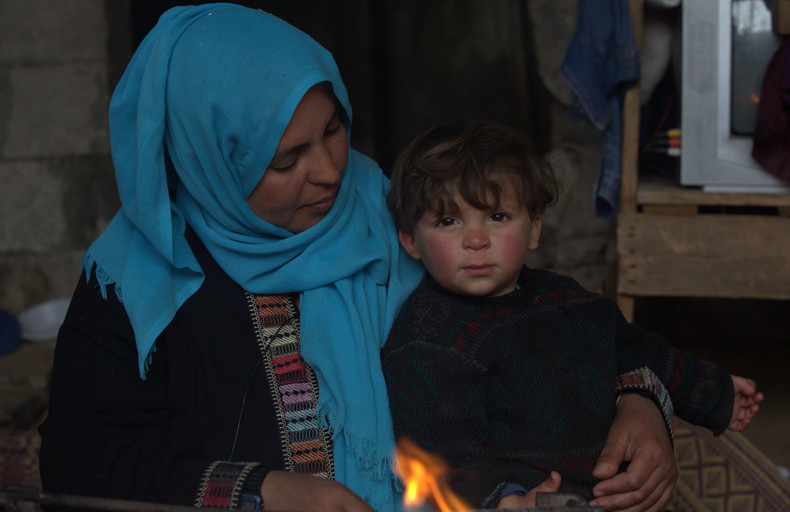
Old women looking sad
Giving sadaqah jariyah as an honor to your parents really reflects on your spirit and emotions, as: Sadaqah Jariyah for the Parents:
With every use by anyone of your Sadaqah, rewards reach your parents. For instance, if one drills a well and gives the proceeds
towards a school, every person who drinks from that well or learns at that school contributes to ongoing good deeds for one’s parents.
Closer to Parents: An example of such actions is making you closer to your parents since they enhance the character your parents
developed in you. Durable Reward: You work in this world and the hereafter, and your parents become known through the good of your
children and progeny practice. Their Status in the Hereafter Being Elevated: It has been reported in the Hadith that because of
the good deeds done on their behalf, Allah upgrades the status of those who have died in Paradise.
Examples of Sadaqah Jariyah (Waqf) for Parents
It is easy to include Sadaqah Jariyah in one’s everyday routine and one doesn’t necessarily have to spend a lot of money to do so.
In fact, it’s the minor acts of kindness that make a difference and can have a ripple effect that goes well beyond our time on this earth.
Following are some practical ways to do Sadaqah Jariyah for parents:
Well: It changes the lives of people by offering clean water. Every drop consumed becomes a source of ongoing rewards.
Education: Giving to schools, libraries, or scholarship funds assures that the knowledge will be ongoing in the lives of many.
Planting Trees: A single tree provides shade, oxygen, and food for decades/years, thereby creating nonstop benefits.
Building mosques: Paying the building cost or maintenance cost for mosques allows continuation of worship by Muslims there, thereby
allowing them to build blessings and rewards generations from this.
Medical Aid: Contributions to the building of hospitals or healthcare facilities, specially via reputable Islamic charities, will
ensure many lives are saved, helpless people are looked after.
Make a Sadaqah Jariyah Contribution in Your Parents’ Honor
If you’re inspired to honor your parents through Sadaqah Jariyah, start today by contributing to a meaningful cause. Many charity
donation websites and the most trustworthy Islamic charities offer secure platforms to donate toward projects like wells, schools,
and hospitals. Take this opportunity to uphold the teachings of Islam concerning parental devotion while leaving a mark. Your charity
becomes a continuous source of blessings for your parents, whether alive or deceased, for you, and for the community as a whole.
Make your Sadaqah Jariyah for parents count—ensure that their legacy shines brightly in this life and the Hereafter.
Many Muslims wonder whether giving money to their parents counts as Sadaqah. Islam teaches us to honour our parents,
support them, and show them love and respect — but is that support considered voluntary charity, or a duty that we owe them?
In this article, we explore the difference between Sadaqah, financial obligations, and Zakat when it comes to caring
for one’s parents.
1. What Is Sadaqah in Islam?
Sadaqah is voluntary charity that a person gives purely to seek the pleasure of Allah ﷻ. It can be
money, food, gifts, or any good deed that benefits others. It is not forced, but given from the heart.
The Qur’an tells us that those who spend in the way of Allah are like a seed that produces many ears of grain –
a symbol of multiplied reward. At the same time, Islam makes a clear distinction between voluntary charity
and obligatory duties. What is already a binding responsibility on a person cannot be re-labelled
as charity.
2. Supporting Parents: An Obligation, Not Sadaqah
The Qur’an repeatedly links belief in Allah with kindness to parents. Being dutiful to them is not just encouraged –
it is commanded. When parents are in genuine financial need, it becomes a fard (obligation)
on their children, especially sons, to care for them.
Allah ﷻ says: “And your Lord has decreed that you not worship except Him, and to parents, good treatment…”
(Surah Al-Isra 17:23)
Because this financial support is a duty, it is not Sadaqah. Sadaqah is optional by nature, whereas spending on one’s
needy parents is part of fulfilling their rights. Scholars across the major schools of fiqh agree that a child is
responsible for the basic needs of parents who cannot provide for themselves.
The Prophet ﷺ said in meaning: “You and your wealth belong to your father.”
This hadith shows that supporting one’s parents is not a favour that can be counted as charity, but a serious religious
responsibility and a path to Allah’s pleasure.
3. Why Giving Zakat to Parents Is Not Allowed
Another important point is that Zakat cannot be given to parents. Zakat is designed to assist those
outside one’s immediate financial responsibility. Using Zakat to support people you are already obliged to maintain
goes against its purpose in the Shari’ah.
Classical scholars have clearly stated that a person cannot give Zakat to their parents or children, even if they are
poor, because their upkeep is already a personal duty.
So, if your parents are in need, you must support them from your own wealth as a duty — not from your Zakat, and not
while calling this Sadaqah.
4. What If Parents Are Not Financially in Need?
If your parents are able to provide for themselves and are not dependent on you, giving them money or gifts becomes
a beautiful act of kindness and love. In this case, it may be rewarded like Sadaqah, because it is not fulfilling
a basic obligation.
Even then, such actions are best understood as part of birr al-wālidayn (righteousness towards
parents) – visiting them, supporting them, making them happy, and honouring them in every way possible.
Looking after parents is one of the greatest forms of righteousness, whether through financial help or other
everyday support.
5. The Importance of Intention When Helping Parents
As in all acts of worship, intention (niyyah) is central. The Prophet ﷺ taught that actions are judged
by their intentions. If you are supporting your parents because they rely on you, your intention should be to fulfil
your duty and seek Allah’s pleasure – this is a noble deed, but not Sadaqah in the technical sense.
If they are not in need, and you still choose to give extra support out of love, gratitude and a desire for reward,
then it can be considered a form of voluntary charity. Either way, the heart and intention behind the act matter greatly.
6. Honouring Parents Through Other Forms of Charity
Even though obligatory support itself is not Sadaqah, Islam opens many other doors of charity connected to one’s parents.
You can:
Donate to Waqf or Sadaqah Jariyah projects on their behalf.
Help build a water well, school, or health project intending the reward for them.
Give regular charity and ask Allah to grant them a share of the reward.
Recite Qur’an, make du‘ā’ for them, and ask Allah to forgive and elevate them.
The Prophet ﷺ taught that ongoing charity, beneficial knowledge, and a righteous child who prays for their parents
continue to benefit a person even after death. Your Sadaqah Jariyah can therefore become a lasting gift for your parents
in this life and the next.
Conclusion: Duty, Love, and True Sadaqah to Parents
Giving money to parents who are in need is not Sadaqah – it is a clear Islamic obligation and one of
the greatest doors to Allah’s pleasure. Zakat also cannot be used to fulfil this responsibility. At the same time,
extra gifts and support given to parents out of love and gratitude can carry the reward of voluntary charity.
The best approach is to combine fulfilling your duty with additional charity in their name.
By supporting Waqf and Sadaqah Jariyah projects on behalf of your parents, you honour them with a legacy of ongoing
reward that continues long after life in this world ends.
Let caring for your parents be one of your greatest acts of worship — in your spending, your manners, and your charity.
If your parents are in financial need and you are supporting them, this is an obligation, not Sadaqah. It is part of
their rights over you and one of your duties in Islam.
Is it Sadaqah if my parents are not in need?
If they are not dependent on you and you still give them money or gifts voluntarily, hoping for reward from Allah,
this can be considered a type of Sadaqah and a form of birr al-wālidayn.
Can I give my Zakat to my parents?
No. Zakat cannot be given to those whose financial support is already your responsibility, such as parents or children.
You must help them from your own wealth, not from your Zakat.
Is financially caring for parents still a good deed if it’s not Sadaqah?
Absolutely. Supporting your parents is among the highest and most beloved deeds to Allah ﷻ. It may not be called Sadaqah,
but it carries immense reward as obedience and righteousness.
How can I honour my parents through charity?
You can donate to Waqf and Sadaqah Jariyah projects in their name, help fund water wells, education or healthcare,
and continuously make du‘ā’ for their well-being and forgiveness.