
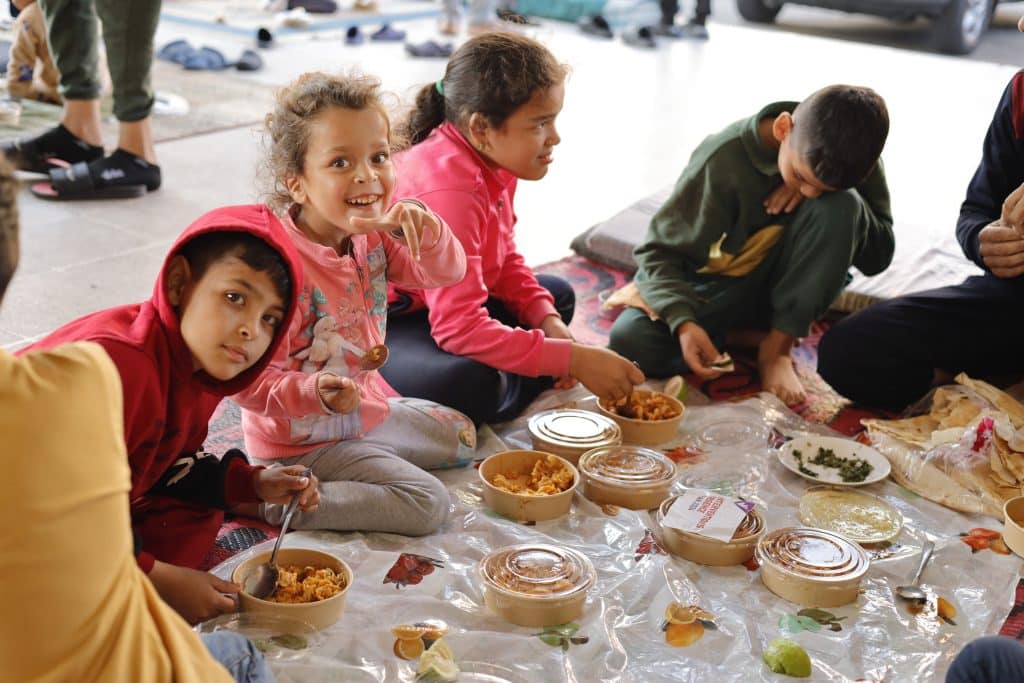
The sceptics say that humanitarian aid doesn’t fix the problem. That with every emergency, relief is a bandaid that doesn’t solve the core issue. But that’s what makes Islamic models of charity so unique. Built into Islamic charity are two fail-safes that ensure that charity is not just a one-off handout, but and enduring legacy for positive change.
First, let’s be clear about one thing. When a community is in trouble and urgently need food, medicine for their children or a place to shelter, humanitarian aid is essential, whether people in privilege consider a one-off donation to be unsustainable or not. Donations during crises save lives, and sustainability is never a reason to deny help.
Traditional charity vs endowment charity
But there’s definitely a valuable discussion in finding ways to make aid – and aid financing – more sustainable in the long term. Traditional charity to people in crisis looks like this:
A community faces a tragedy, such as flash floods.
They are forced to flee, or their homes are destroyed.
An appeal is launched to provide essential items – food, water, shelter, and medicine.
The community receives this aid, and it does save their lives at that point.
The cause for the flooding is not addressed, in the next heavy rains, more people are killed and displaced, another appeal is needed.
Let’s take a look at the Pakistan floods as an example. In 2022, devastating floods submerged a third of the country, displacing 7 million people in one province alone and killing over 1,000 people. $600 million was sent to Pakistan in aid.
But cyclical monsoon seasons and the lack of flood resilience means that families that survived those floods were later displaced or killed by floods. In the 2025 floods, over 1,000 people have been killed and 1.8 million displaced. They caused $1.4 billion worth of damage.
But what if aid looked different?
A community faces a tragedy, such as flash floods.
An endowment model is already in place, so profits are withdrawn to help in the immediate with shelter, water, and food.
Once the floods recede, the endowment also invests in flood prevention, flood-resistant homes.
Next time it floods, families and communities are resilient.
This is where the Islamic endowment model comes in.
Sustainable charity
Waqf is an endowment charity – the donated asset stays intact and untouched, benefiting people forever. Examples of waqf include donating land to a community to grow food on, or building an orphanage. Nobody ever owns the item donated, and it remains in perpetuity for the community.
But a waqf can also be a building or estate that generates an income, with the income being used to help empower communities, and even help during emergencies. Since the building is never sold or owned, income is generated forever, and people are helped forever too.
Rather than having to fundraise for every emergency, waqf endowments generate income organically that can be used to support people – in times of crisis it can provide food, shelter, and medicine, and, later, it can be used to repair and empower communities by providing livelihoods, schools and hospitals.
It’s an Islamic model dating back to the time of the Prophet Muhammad, peace and blessings be upon him, but it’s not exclusively Muslim.
In fact, some of the most famous institutions in the world were funded with this waqf endowment model.
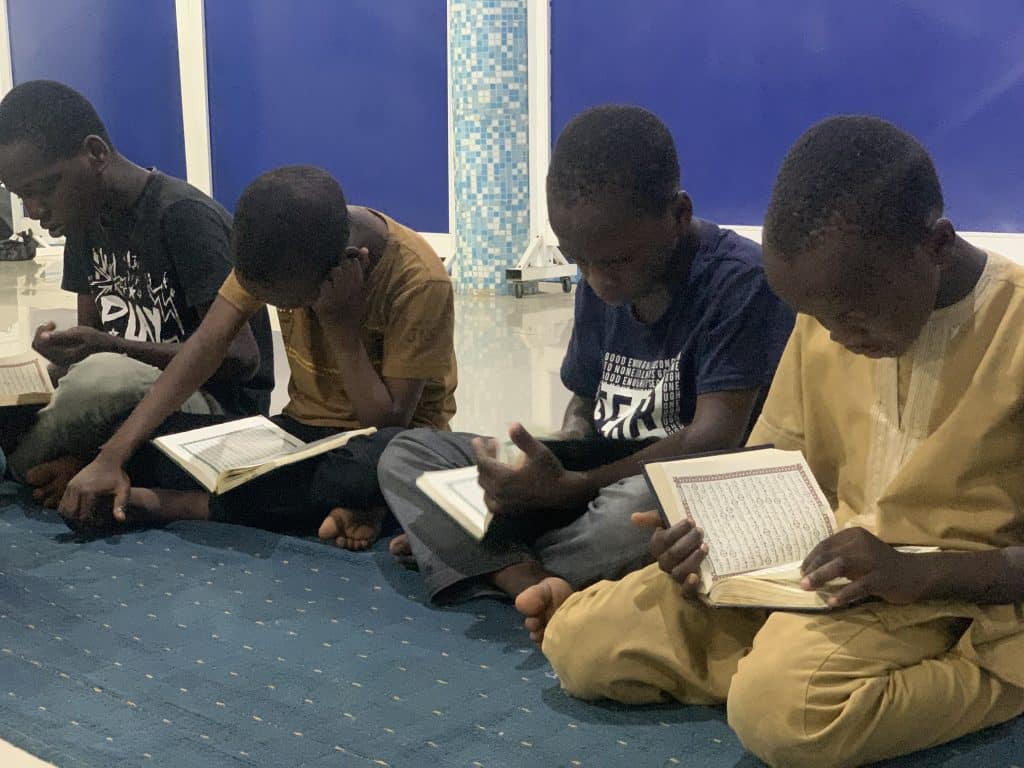
Oxford University is an endowment like waqf?
Yes! Both Oxford and Cambridge universities were built by wealthy donors of their time. This included merchants and landowners, the clergy, royalty, and alumni. Significantly, these universities were not founded or funded by governments or corporations, but individuals
These donors didn’t simply give cash, they endowed land and estates, buildings, rental properties, as well as income-generating assets, such as mills.
We must point out here that many donors to these universities made their wealth through exploitation, both through the transatlantic slave trade and through violent working conditions in the UK. Our focus in this moment is a study of the charitable financing models, though we condemn the exploitative methods of some of the endowers to Oxford and Cambridge universities.
Those who endowed wealth to the universities gifted assets that were legally restricted, stipulating how their donation should be used – such as for scholarships, teaching posts, or upkeep of colleges. Some of these donations, made up to 700 years ago are still generating income today.
Waqf today
Today, these endowment models persist in Islamic charity, though new examples are much rarer in the western world. Importantly, any exploitation would contradict Islamic principles and void the blessings of charity.
Universities today still invest in endowments such as stocks, equities and property which help to maintain the campuses and futures of the institutions. What if all humanitarian aid was funded by the waqf endowment model?
A person donates £100 to The Waqf Fund, with a sector of their choosing, such as education.
We pool this with other donations and invest in stable, ethical investments, such as a business property for rent.
Each year, we withdraw only the profit generated, and use that to fund education projects, with a small amount of profit reinvested, so that your charity grows each year.
Every year, the number of people you help with education projects increases. Even if you’re never able to give charity again, your waqf endowment continues to grow and change lives.
Do I have to be a Muslim to give waqf?
Anyone can endow a waqf charity, and we hope you understand this important foundation of Islamic charity better now! If you’re interested in giving a charity that lasts and lasts, make an endowment with The Waqf Fund today!